
Công nghệ thông tin · chủ đề 6/9
Dữ liệu và cơ sở dữ liệu
Data and databases
28 thuật ngữ28 câu ví dụ📐 kí hiệu, đơn vị, công thức
Tất cả chủ đề9 chủ đề
- 1. Phần cứng máy tính40 thuật ngữ
- 2. Hệ điều hành và tệp49 thuật ngữ
- 3. Sử dụng phần mềm ứng dụng30 thuật ngữ
- 4. Mạng máy tính và Internet37 thuật ngữ
- 5. Lập trình cơ bản49 thuật ngữ
- 6. Dữ liệu và cơ sở dữ liệu28 thuật ngữ
- 7. Phát triển phần mềm40 thuật ngữ
- 8. An toàn thông tin23 thuật ngữ
- 9. Thiết kế web21 thuật ngữ
Luyện thẻ ghi nhớ
💡 Mẹo: lật thẻ để xem nghĩa, bấm loa để nghe giọng Anh-Anh.
/ˈdeɪtə ˈstrʌk(t)ʃə/
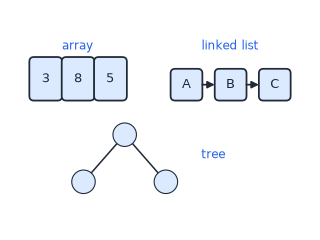
cấu trúc dữ liệu (data structure)
a way of organising data for efficient access
A hash table is a common data structure.
Bảng băm là một cấu trúc dữ liệu phổ biến.
/əˈreɪ/
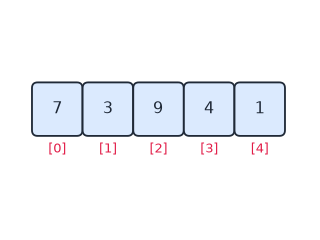
mảng (array)
a data structure holding items of the same type with numeric indexes
Store the scores in an array.
Hãy lưu các điểm số trong một mảng.
/ˈɪndeks/
chỉ số (index)
a number that shows the position of an item in an array
The first element of the array has index zero.
Phần tử đầu tiên của mảng có chỉ số không.
/ˈvektə/
mảng động (vector)
an array whose size can grow or shrink
Add the new item to the vector at the end.
Hãy thêm phần tử mới vào cuối mảng động.
/stæk/
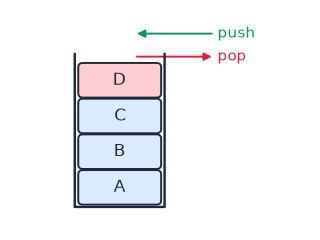
ngăn xếp (stack)
a data structure where the last item added is removed first
A stack follows the last in, first out rule.
Ngăn xếp tuân theo quy tắc vào sau, ra trước.
/pʊʃ/
đẩy vào ngăn xếp (push)
to add an item to the top of a stack
Push the new value onto the stack before returning.
Hãy đẩy giá trị mới vào ngăn xếp trước khi trả về.
/pɒp/
lấy ra khỏi ngăn xếp (pop)
to remove the top item from a stack
Pop the last item off the stack to undo the action.
Hãy lấy phần tử cuối ra khỏi ngăn xếp để hoàn tác thao tác.
/kjuː/
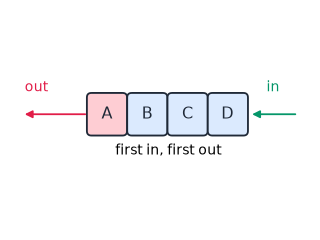
hàng đợi (queue)
a data structure where items leave in the order they arrived
A queue works on a first in, first out basis.
Hàng đợi hoạt động theo nguyên tắc vào trước, ra trước.
/ˈdɪkʃənəri/
từ điển (dictionary)
a data structure that stores values accessed by keys
Use a dictionary to look up a user by their ID.
Hãy dùng một từ điển để tra cứu người dùng theo ID.
/mæp/
ánh xạ khóa-giá trị, từ điển (map)
a data structure linking keys to values
Store each user's score in a map by user ID.
Hãy lưu điểm của từng người dùng trong một map theo mã người dùng.
/ruːt/
nút gốc (root)
the top node of a tree that has no parent
The search starts from the root of the tree.
Việc tìm kiếm bắt đầu từ nút gốc của cây.
/ˈpeərənt/
nút cha (parent)
the item or node that a child item belongs to
Deleting the parent node also deletes its children.
Xóa nút cha cũng xóa luôn các nút con của nó.
/tʃaɪld/
phần tử con (child)
an item or node that depends on another, its parent
Each child node inherits settings from its parent.
Mỗi nút con thừa hưởng các thiết lập từ nút cha của nó.
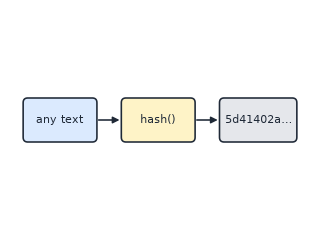
/ˈhæʃ/
giá trị băm (hash)
a fixed-length value produced by a hash function
The system stores the hash of the password, not the password.
Hệ thống lưu giá trị băm của mật khẩu chứ không lưu mật khẩu.
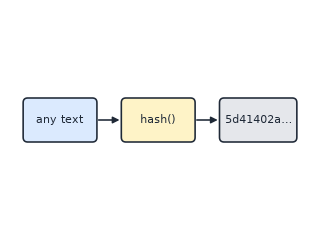
/ˈhæʃɪŋ/
băm dữ liệu (hashing)
computing a fixed-size hash value from data
Password hashing protects user accounts if the database leaks.
Băm mật khẩu bảo vệ tài khoản người dùng nếu cơ sở dữ liệu bị lộ.
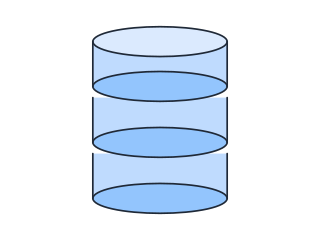
/ˈdeɪtəbeɪs/
cơ sở dữ liệu (database)
an organised collection of structured data
We store customer orders in a database.
Chúng tôi lưu các đơn hàng của khách trong một cơ sở dữ liệu.
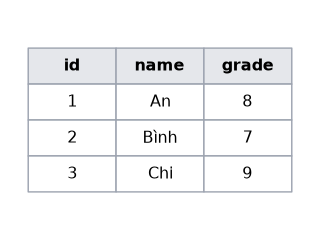
/ˈteɪbl/
bảng tra cứu (lookup table)
a table of values used to find results quickly
The program uses a lookup table to convert codes to names.
Chương trình dùng một bảng tra cứu để chuyển mã thành tên.
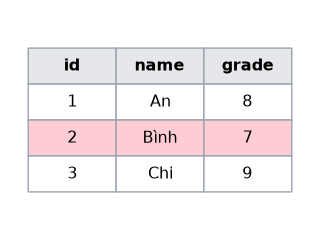
/ˈrekɔːd/
bản ghi (record)
a set of data about one person or item
Each customer record includes a name and an email.
Mỗi bản ghi khách hàng gồm một tên và một địa chỉ email.
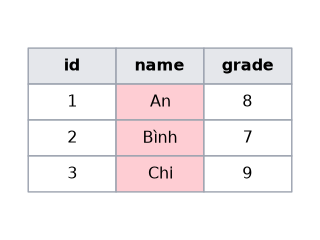
/ˈfi(ː)ld/
trường dữ liệu (field)
a named space for one value in a record or form
The email field cannot be left empty.
Trường email không được để trống.
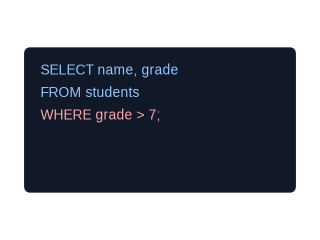
/ˈkwɪəri/
truy vấn (query)
a request for information sent to a database
The slow query is making the page load late.
Câu truy vấn chậm đang làm trang tải trễ.
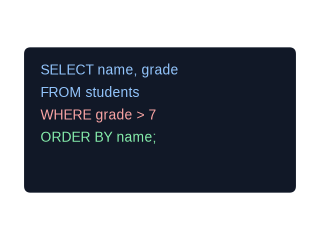
/ˌes kjuː ˈel/
ngôn ngữ truy vấn SQL (SQL)
a language for managing and querying relational databases
He wrote an SQL query to find all active users.
Anh ấy viết một câu truy vấn SQL để tìm tất cả người dùng đang hoạt động.
/ˈdʒɔɪn/
kết hợp bảng (join)
to combine rows from two or more database tables
Join the orders table with the customers table by customer ID.
Hãy kết hợp bảng đơn hàng với bảng khách hàng theo mã khách hàng.
/ˈmɒdl/
mô hình dữ liệu (model)
the part of an application that manages the data
The model validates the data before saving it.
Mô hình kiểm tra dữ liệu trước khi lưu.
/ˈmetəˌdeɪtə/
siêu dữ liệu (metadata)
information about a file, such as its creator and date
The photo's metadata shows when it was taken.
Siêu dữ liệu của bức ảnh cho biết nó được chụp khi nào.

/ˌɑːtəˈfɪʃəl ɪnˈtelədʒəns/
trí tuệ nhân tạo (artificial intelligence)
computer systems that imitate human thinking and learning
Artificial intelligence is changing how we write software.
Trí tuệ nhân tạo đang thay đổi cách chúng ta viết phần mềm.
/məˈʃiːn ˈlɜːnɪŋ/
học máy (machine learning)
a field where computers learn patterns from data without explicit rules
She is studying machine learning to build a recommendation system.
Cô ấy đang học về học máy để xây dựng hệ thống gợi ý.
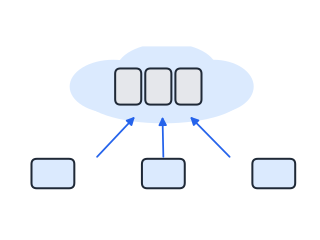
/ˈklaʊd kəmˈpjuːtɪŋ/
điện toán đám mây (cloud computing)
computing services delivered on demand over the Internet
Cloud computing lets small teams scale without buying servers.
Điện toán đám mây giúp các nhóm nhỏ mở rộng mà không cần mua máy chủ.
/bætʃ/
lô dữ liệu (batch)
a group of data processed together at one time
The system processes orders in a batch every night.
Hệ thống xử lý các đơn hàng theo lô mỗi đêm.