
Công nghệ thông tin · chủ đề 8/9
An toàn thông tin
Information security
23 thuật ngữ23 câu ví dụ📐 kí hiệu, đơn vị, công thức
Tất cả chủ đề9 chủ đề
- 1. Phần cứng máy tính40 thuật ngữ
- 2. Hệ điều hành và tệp49 thuật ngữ
- 3. Sử dụng phần mềm ứng dụng30 thuật ngữ
- 4. Mạng máy tính và Internet37 thuật ngữ
- 5. Lập trình cơ bản49 thuật ngữ
- 6. Dữ liệu và cơ sở dữ liệu28 thuật ngữ
- 7. Phát triển phần mềm40 thuật ngữ
- 8. An toàn thông tin23 thuật ngữ
- 9. Thiết kế web21 thuật ngữ
Luyện thẻ ghi nhớ
💡 Mẹo: lật thẻ để xem nghĩa, bấm loa để nghe giọng Anh-Anh.
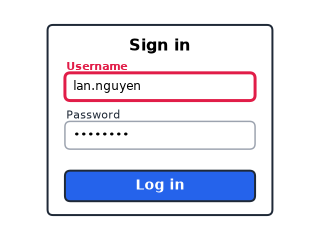
/ˈjuːzəneɪm/
tên người dùng (username)
the name a person uses to sign in
Please enter your username and password to sign in.
Vui lòng nhập tên người dùng và mật khẩu để đăng nhập.
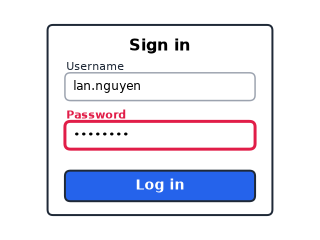
/ˈpæswɜrd/
mật khẩu (password)
a secret string of characters used to log in
Choose a strong password with letters and numbers.
Hãy chọn một mật khẩu mạnh gồm chữ cái và chữ số.
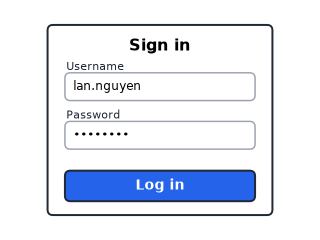
/ˈlɒɡɪn/
thông tin đăng nhập (login)
the username and password used to enter a system
Please enter your login to continue.
Vui lòng nhập thông tin đăng nhập của bạn để tiếp tục.
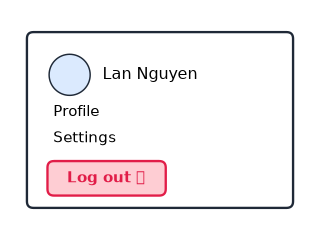
/ˈlɒɡaʊt/
đăng xuất (logout)
the act of ending a user session
Click the logout button when you finish working.
Hãy nhấn nút đăng xuất khi bạn làm xong.
/ˈækses/
truy cập (access)
to reach or retrieve data or a system
Only admins can access the production database.
Chỉ quản trị viên mới có thể truy cập cơ sở dữ liệu thật.
/ˈseʃən/
phiên làm việc (session)
the period during which a user is logged in or connected
Your session expires after 30 minutes.
Phiên làm việc của bạn hết hạn sau 30 phút.
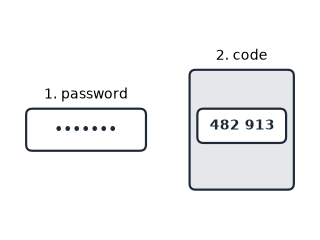
/tu ˈfæktə ɔːˌθentɪˈkeɪʃn/
xác thực hai yếu tố (two-factor authentication)
a login method that needs two separate proofs of identity
We enabled two-factor authentication for all admin accounts.
Chúng tôi đã bật xác thực hai yếu tố cho tất cả tài khoản quản trị.
/ˈvaɪrəs/
vi-rút máy tính (virus)
malware that spreads by inserting itself into other programs
The antivirus found a virus in the downloaded file.
Phần mềm diệt vi-rút đã tìm thấy vi-rút trong tệp tải xuống.
/ˈmælweː/
phần mềm độc hại (malware)
software designed to harm or disrupt a computer
The laptop was infected with malware.
Máy tính xách tay đã bị nhiễm phần mềm độc hại.
/wɜːm/
sâu máy tính (worm)
a self-copying program that spreads across a network
The worm spread to hundreds of computers in minutes.
Con sâu máy tính đã lây sang hàng trăm máy chỉ trong vài phút.
/spæm/
thư rác (spam)
unwanted messages sent in large numbers, usually for advertising
Our email filter moves spam to a separate folder.
Bộ lọc email của chúng tôi chuyển thư rác vào một thư mục riêng.
/skæn/
quét (scan)
to inspect something, often to find problems
The tool scans every file for security vulnerabilities.
Công cụ này quét mọi tệp để tìm lỗ hổng bảo mật.
/ˈkwɔrəntin/
cách ly (quarantine)
isolating a suspicious program or file to limit damage
The antivirus moved the infected file to quarantine.
Phần mềm diệt virus đã chuyển tệp bị nhiễm vào khu cách ly.
/hækə/
tin tặc (hacker)
a person who gets into computer systems without permission
A hacker stole thousands of passwords from the website.
Một tin tặc đã đánh cắp hàng nghìn mật khẩu từ trang web.
/əˈtæk/
cuộc tấn công (attack)
an attempt to exploit a weakness in a computer system
The server went down after a denial-of-service attack.
Máy chủ bị sập sau một cuộc tấn công từ chối dịch vụ.
/ˈsaɪbə əˈtæk/
tấn công mạng (cyber attack)
a hostile attempt to damage or break into computer systems
The company reported a cyber attack on its servers last night.
Công ty đã báo cáo một cuộc tấn công mạng vào máy chủ của họ đêm qua.
/ˈvʌln(ə)rəbl/
dễ bị tấn công (vulnerable)
more likely to be exposed to malicious programs or attacks
Old software is vulnerable to security attacks.
Phần mềm cũ dễ bị tấn công về bảo mật.
/snɪf/
bắt gói tin (sniff)
to intercept and analyse data packets on a network
The tool can sniff packets on the office network.
Công cụ này có thể bắt gói tin trên mạng văn phòng.
/saɪbəsɪˈkjʊərɪtɪ/
an ninh mạng (cybersecurity)
the practice of protecting systems and data from attacks
He is studying cybersecurity to become a security engineer.
Anh ấy đang học an ninh mạng để trở thành kỹ sư bảo mật.
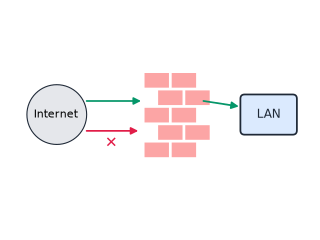
/ˈfaɪəwɔəl/
tường lửa (firewall)
a security system that filters network traffic
The firewall blocked the suspicious connection.
Tường lửa đã chặn kết nối đáng ngờ.
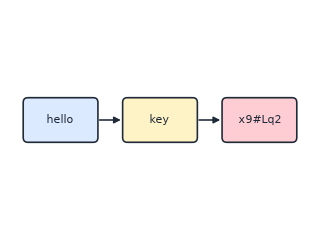
/ɪŋˈkrɪpʃən/
mã hóa (encryption)
making data unreadable without a key or password
Encryption protects your messages from hackers.
Mã hóa bảo vệ tin nhắn của bạn khỏi tin tặc.
/kiː/
khóa mật mã (key)
a secret value used to encrypt or decrypt data
Keep your private key safe and never share it.
Hãy giữ khóa riêng của bạn an toàn và đừng bao giờ chia sẻ nó.
/ˌnɒnrɪˌpjuːdiˈeɪʃn/
tính chống chối bỏ (non-repudiation)
assurance that a sender or receiver cannot deny the message
Digital signatures provide nonrepudiation for online contracts.
Chữ ký số đảm bảo tính chống chối bỏ cho hợp đồng trực tuyến.