
Môi trường · chủ đề 2/13
Ô nhiễm không khí
Air pollution
31 thuật ngữ31 câu ví dụ📐 kí hiệu, đơn vị, công thức
Nhập môn môi trường1 chủ đề
Không khí, nước, đất, tiếng ồn3 chủ đề
Quan trắc và xử lý4 chủ đề
Khí hậu, sinh học, pháp luật3 chủ đề
Năng lượng và bền vững1 chủ đề
Giao tiếp công việc1 chủ đề
Luyện thẻ ghi nhớ
💡 Mẹo: lật thẻ để xem nghĩa, bấm loa để nghe giọng Anh-Anh.
/ˈeə pəˌluːʃn/
ô nhiễm không khí
Sự hiện diện trong không khí của khí, bụi hoặc chất khác ở mức gây hại cho sức khoẻ hoặc môi trường.
The presence in the air of gases, dust or other substances at levels that harm health or the environment.
Nguồn chính: giao thông, công nghiệp, đốt rơm rạ, xây dựng
Air pollution rises sharply when traffic is heavy.
Ô nhiễm không khí tăng mạnh khi giao thông đông đúc.
/pɑːˌtɪkjʊlət ˈmætə/
bụi mịn, hạt vật chất
Hỗn hợp các hạt rắn và lỏng rất nhỏ lơ lửng trong không khí, được phân loại theo kích thước.
A mixture of tiny solid and liquid particles suspended in the air, classified by size.
Viết tắt PM; chia theo đường kính khí động học
Particulate matter is the most harmful pollutant for the lungs.
Bụi mịn là chất ô nhiễm gây hại nhất cho phổi.
/ˌpiː em tuː pɔɪnt ˈfaɪv/
bụi PM2.5
Các hạt mịn có đường kính từ 2,5 micrômét trở xuống, có thể vào sâu trong phổi.
Fine particles with a diameter of 2.5 micrometres or less that can reach deep into the lungs.
Đường kính ≤ 2,5 µm; đơn vị µg/m³
The PM2.5 level in Hanoi exceeded the daily limit.
Nồng độ PM2.5 ở Hà Nội vượt giới hạn trung bình ngày.
/ˌpiː em ˈten/
bụi PM10
Các hạt có đường kính từ 10 micrômét trở xuống, gồm bụi, phấn hoa và một phần khói.
Particles with a diameter of 10 micrometres or less, including dust, pollen and some smoke.
Đường kính ≤ 10 µm; thô hơn PM2.5
Construction sites are a major source of PM10.
Công trường xây dựng là nguồn PM10 chính.
/dʌst/
bụi
Các hạt khô mịn của đất, tro hoặc vật liệu khác lơ lửng trong không khí hoặc đọng trên bề mặt.
Fine dry particles of soil, ash or other material that float in the air or settle on surfaces.
TSP = tổng bụi lơ lửng (total suspended particulates)
Workers wear masks because of the dust in the quarry.
Công nhân đeo khẩu trang vì bụi trong mỏ đá.
/ˌnaɪtrədʒən ˈɒksaɪdz/
oxit nitơ (NOx)
Các khí gồm nitơ và oxy, chủ yếu là NO và NO₂, hình thành khi nhiên liệu cháy ở nhiệt độ cao.
Gases made of nitrogen and oxygen, mainly NO and NO2, formed when fuel burns at high temperature.
Viết tắt NOx = NO + NO₂; tiền chất của ozone và mưa axit
Nitrogen oxides from diesel engines help to form smog over the city.
Oxit nitơ từ động cơ diesel góp phần tạo sương khói trên thành phố.
/ˌsʌlfə daɪˈɒksaɪd/
lưu huỳnh đioxit (SO₂)
Khí không màu, mùi hắc, sinh ra khi đốt than và dầu có chứa lưu huỳnh.
A colourless gas with a sharp smell, released when coal and oil containing sulphur are burned.
Công thức SO₂; British: sulphur (Mỹ: sulfur)
Sulphur dioxide from the power plant causes acid rain.
Lưu huỳnh đioxit từ nhà máy điện gây ra mưa axit.
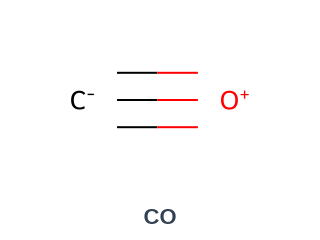
/ˌkɑːbən məˈnɒksaɪd/
cacbon monoxit (CO)
Khí độc không màu sinh ra khi nhiên liệu cháy không hoàn toàn, ngăn máu vận chuyển oxy.
A poisonous colourless gas produced by incomplete burning of fuel, which prevents blood carrying oxygen.
Công thức CO; không mùi — nguy hiểm
Faulty gas heaters can release carbon monoxide into small, closed rooms.
Lò sưởi ga hỏng có thể thải cacbon monoxit vào các phòng nhỏ kín.
/ˌvɒlətaɪl ɔːˌɡænɪk ˈkɒmpaʊndz/
hợp chất hữu cơ dễ bay hơi (VOC)
Hoá chất hữu cơ dễ bay hơi ở nhiệt độ phòng, góp phần hình thành ôzôn tầng thấp.
Organic chemicals that evaporate easily at room temperature and help to form ground-level ozone.
Viết tắt VOCs; benzen, toluen, xylen
Paints and cleaning solvents release volatile organic compounds into the indoor air.
Sơn và dung môi tẩy rửa thải các hợp chất hữu cơ dễ bay hơi vào không khí trong nhà.
/ˈəʊdə/
mùi
Cảm giác về một thứ có mùi, thường khó chịu, phát ra từ nguồn như bãi rác hoặc trạm xử lý nước thải.
A smell, usually unpleasant, from a source such as a waste site or wastewater plant.
British: odour; đo bằng olfactometry (đo độ mùi)
Residents complained about the odour from the landfill.
Cư dân phàn nàn về mùi từ bãi chôn lấp.
/ˈeə ˌkwɒləti/
chất lượng không khí
Thước đo mức độ sạch hay ô nhiễm của không khí, đối chiếu với các tiêu chuẩn dựa trên sức khoẻ.
A measure of how clean or polluted the air is, judged against health-based standards.
Quan trắc tự động liên tục ở trạm cố định
Air quality improved after the ban on coal stoves.
Chất lượng không khí được cải thiện sau lệnh cấm bếp than.
/ˌeə ˌkwɒləti ˈɪndeks/
chỉ số chất lượng không khí (AQI)
Con số từ 0 trở lên tóm tắt mức ô nhiễm không khí và nguy cơ đối với sức khoẻ tương ứng.
A number from 0 upward that summarises how polluted the air is and what health risk it carries.
I = (I_cao − I_thấp)/(BP_cao − BP_thấp) × (C − BP_thấp) + I_thấp; lấy max các chất
The air quality index reached 180 this morning.
Chỉ số chất lượng không khí sáng nay đạt 180.
/ˌɡraʊnd levl ˈəʊzəʊn/
ôzôn tầng mặt đất
Khí có hại hình thành gần mặt đất khi ánh nắng phản ứng với các oxit nitơ và hợp chất hữu cơ dễ bay hơi.
A harmful gas formed near the ground when sunlight reacts with nitrogen oxides and volatile organic compounds.
O₃ mặt đất độc hại; ≠ tầng ôzôn bảo vệ ở tầng bình lưu
Ground-level ozone peaks on hot, sunny afternoons when traffic is heavy.
Ôzôn tầng mặt đất đạt đỉnh vào những chiều nắng nóng khi giao thông đông đúc.
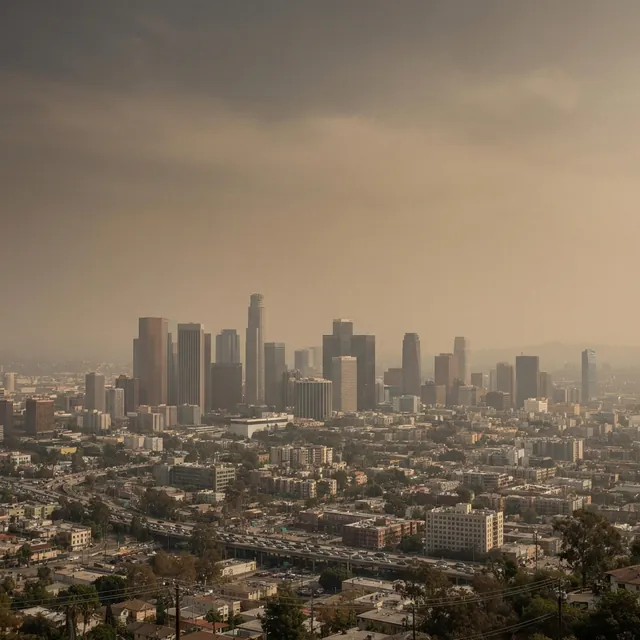
/smɒɡ/
sương khói quang hoá
Lớp khói bụi dày hình thành khi ánh nắng phản ứng với khói xe và công nghiệp trong không khí lặng.
A thick haze of pollution formed when sunlight and fumes from traffic and industry react in still air.
smoke + fog; photochemical smog = sương khói quang hoá
Smog covered the whole city for three days and schools closed.
Sương khói bao phủ cả thành phố ba ngày và các trường phải đóng cửa.
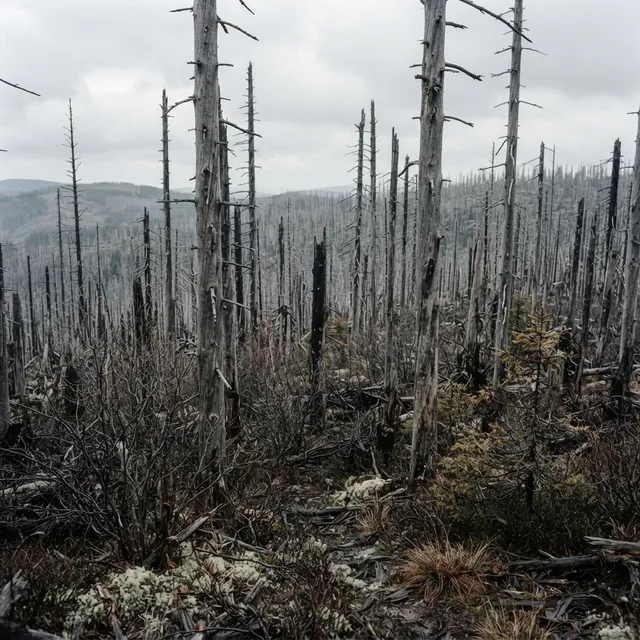
/ˌæsɪd ˈreɪn/
mưa axit
Mưa có tính axit cao bất thường do lưu huỳnh đioxit và các oxit nitơ hoà tan trong nước mưa.
Rain that is unusually acidic because sulphur dioxide and nitrogen oxides have dissolved in it.
pH < 5,6; do SO₂ và NOx
Acid rain damaged the forest near the smelter.
Mưa axit đã làm hại khu rừng gần nhà máy luyện kim.
/ˈtemprətʃər ɪnˈvɜːʃn/
nghịch nhiệt
Lớp không khí ấm nằm trên lớp không khí lạnh hơn sát mặt đất, giữ ô nhiễm ở gần bề mặt.
A layer of warm air above cooler air near the ground that traps pollution close to the surface.
Thường xảy ra sáng sớm mùa đông; làm AQI tăng
A temperature inversion kept the dust over the valley.
Hiện tượng nghịch nhiệt giữ bụi lại trên thung lũng.
/ˌɪndɔː ˈeə ˌkwɒləti/
chất lượng không khí trong nhà
Tình trạng không khí bên trong toà nhà, ảnh hưởng đến sức khoẻ và sự thoải mái của người sử dụng.
The condition of the air inside buildings as it affects the health and comfort of occupants.
Đo CO₂ trong phòng để đánh giá thông gió
Poor ventilation lowers indoor air quality in the office.
Thông gió kém làm giảm chất lượng không khí trong văn phòng.
/ˌsteɪʃənri ˈsɔːs/
nguồn thải cố định
Cơ sở cố định, như nhà máy, nồi hơi hay nhà máy điện, thải chất ô nhiễm từ một vị trí.
A fixed facility, such as a factory, boiler or power station, that releases pollutants from one place.
≠ mobile source
Each stationary source in the plant needs its own emission permit.
Mỗi nguồn thải cố định trong nhà máy cần giấy phép phát thải riêng.
/ˌməʊbaɪl ˈsɔːs/
nguồn thải di động
Phương tiện, tàu, máy bay hoặc máy móc thải ra chất ô nhiễm trong khi di chuyển.
A vehicle, ship, aircraft or machine that releases pollutants while it moves.
On-road / off-road mobile sources
Motorbikes are the main mobile source in the city.
Xe máy là nguồn thải di động chính trong thành phố.
/ˌfjuːdʒətɪv ɪˈmɪʃn/
phát thải phát tán
Sự thải khí hoặc bụi không theo kế hoạch từ các điểm rò rỉ hoặc khu vực hở, không qua ống khói.
An unplanned release of gas or dust from leaks or open areas, not through a stack.
Không qua ống khói; khó đo trực tiếp
Leaking valves and pipe joints cause fugitive emissions of solvent vapour.
Van và mối nối ống bị rò gây phát thải phát tán hơi dung môi.
/ˈfluː ɡæs/
khí thải lò đốt
Hỗn hợp khí thoát ra khỏi lò hơi, lò nung hoặc lò đốt qua ống khói sau khi đốt nhiên liệu.
The mixture of gases that leaves a boiler, furnace or incinerator through a chimney after burning fuel.
Đo O₂ dư để quy đổi về điều kiện chuẩn
The flue gas temperature is 180 degrees Celsius.
Nhiệt độ khí thải lò là 180 độ C.
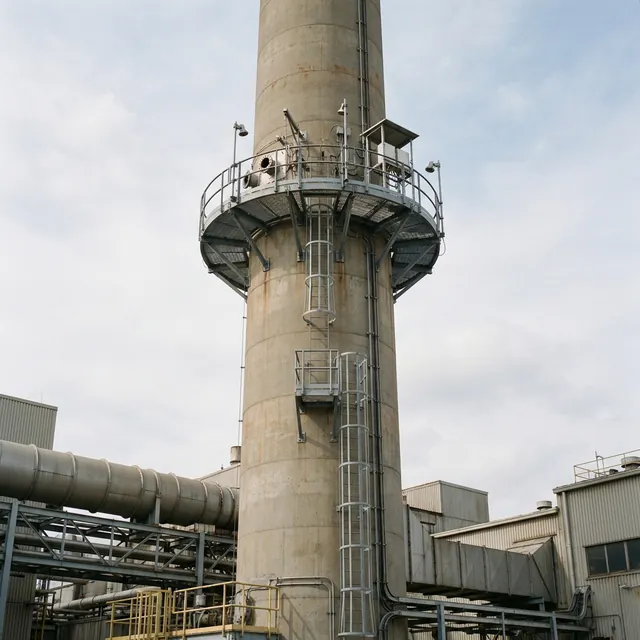
/stæk/
ống khói
Ống đứng cao hoặc ống khói dẫn khí thải từ nhà máy lên cao và thoát ra không khí.
A tall vertical pipe or chimney that carries waste gases from a plant up and away into the air.
Cũng: chimney; cổng lấy mẫu trên ống khói
The stack height is 40 metres, which helps the fumes disperse widely.
Chiều cao ống khói là 40 mét, giúp khói thải phát tán rộng.
/ɪˈmɪʃn ˌfæktə/
hệ số phát thải
Giá trị liên hệ lượng chất ô nhiễm thải ra với một hoạt động, như kg trên mỗi tấn nhiên liệu.
A value that links the amount of a pollutant released to an activity, such as kilograms per tonne of fuel.
Lượng phát thải = dữ liệu hoạt động × hệ số phát thải
We used an emission factor for coal to estimate the SO2.
Chúng tôi dùng hệ số phát thải của than để ước tính SO₂.
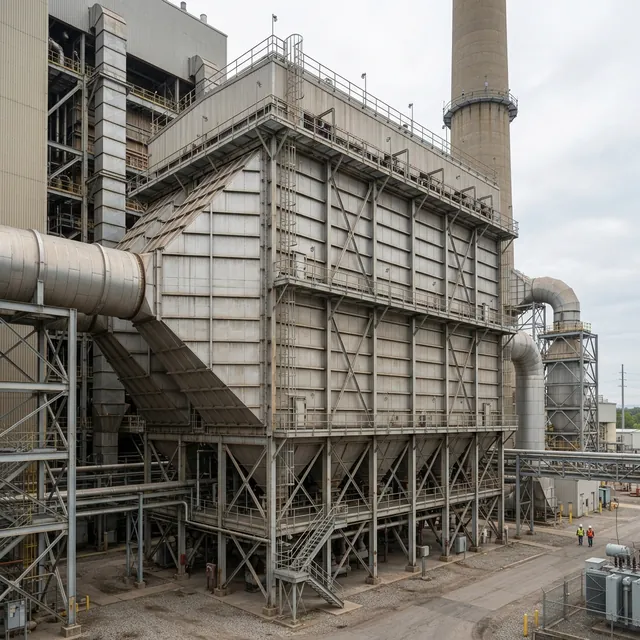
/ɪˌlektrəʊˈstætɪk prɪˈsɪpɪteɪtə/
lọc bụi tĩnh điện
Thiết bị làm hạt bụi nhiễm điện để bám vào các bản cực và được tách khỏi khí.
A device that gives dust particles an electric charge so they stick to plates and are removed from the gas.
Viết tắt ESP; hiệu suất cao với bụi mịn
The electrostatic precipitator removes 99 percent of the fly ash.
Bộ lọc bụi tĩnh điện loại bỏ 99 phần trăm tro bay.
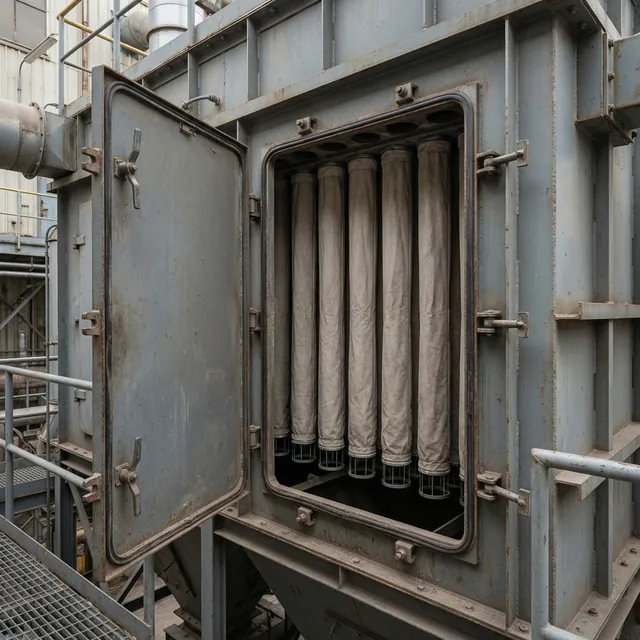
/ˈbæɡ ˌfɪltə/
lọc bụi túi vải
Thiết bị lọc trong đó khí lẫn bụi đi qua các túi vải giữ lại các hạt bụi.
A filter in which dusty gas passes through fabric bags that trap the particles.
Cũng: baghouse; rũ bụi bằng khí nén
The bag filter needs cleaning every shift to keep the dust removal efficient.
Lọc bụi túi vải cần được làm sạch mỗi ca để duy trì hiệu quả lọc bụi.
/ˈsaɪkləʊn ˈsepəreɪtə/
xyclon tách bụi
Thiết bị hình nón làm khí lẫn bụi xoáy tròn để các hạt nặng bị văng ra và rơi xuống phễu.
A cone-shaped device that spins dusty gas so that heavy particles are thrown out and fall to a hopper.
Xử lý bụi thô; rẻ, không có bộ phận chuyển động
A cyclone separator is used before the bag filter.
Xyclon tách bụi được dùng trước lọc bụi túi vải.
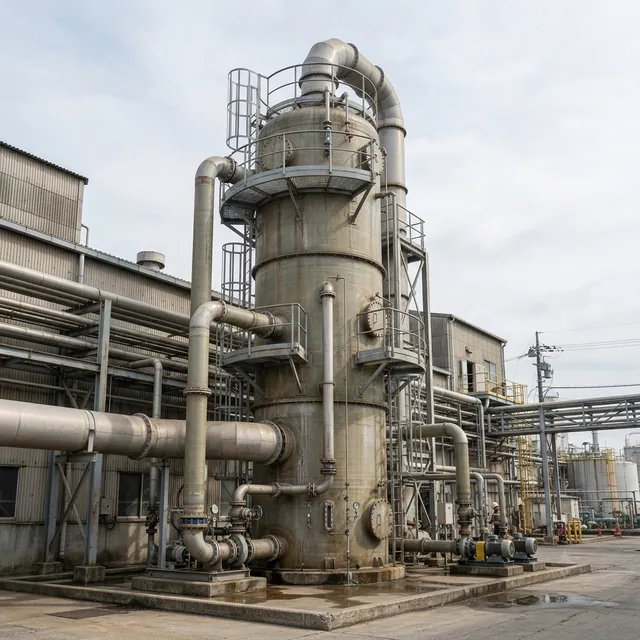
/ˌwet ˈskrʌbə/
tháp rửa khí ướt
Thiết bị rửa khí bằng chất lỏng để loại bỏ bụi hoặc khí hoà tan.
A device that washes gas with liquid to remove dust or soluble gases.
Dung dịch kiềm hấp thụ SO₂, HCl; sinh nước thải
The wet scrubber removes acid gases from the exhaust.
Tháp rửa khí ướt loại bỏ khí axit khỏi khí thải.
/ˌfluː ɡæs diːˌsʌlfəraɪˈzeɪʃn/
khử lưu huỳnh khí thải (FGD)
Quá trình loại lưu huỳnh đioxit khỏi khí thải nhà máy nhiệt điện than, thường dùng đá vôi.
A process that removes sulphur dioxide from the exhaust of coal-fired plants, often with limestone.
Viết tắt FGD; British: desulphurisation
Flue gas desulphurisation cut SO2 emissions by 90 percent.
Khử lưu huỳnh khí thải giảm phát thải SO₂ 90 phần trăm.
/sɪˌlektɪv ˌkætəˈlɪtɪk rɪˈdʌkʃn/
khử xúc tác chọn lọc (SCR)
Phương pháp chuyển oxit nitơ thành nitơ và nước bằng amoniac hoặc urê trên chất xúc tác.
A method that converts nitrogen oxides into nitrogen and water using ammonia or urea over a catalyst.
Viết tắt SCR; xử lý NOx; cần urê/NH₃
Selective catalytic reduction is fitted to the diesel generator.
Hệ khử xúc tác chọn lọc được lắp cho máy phát diesel.
/ˌkætəˌlɪtɪk kənˈvɜːtə/
bộ chuyển đổi xúc tác
Bộ phận trên ống xả biến các khí độc như CO và NOx thành các khí ít độc hại hơn.
A device in a vehicle exhaust that turns harmful gases such as CO and NOx into less harmful ones.
Chuyển CO, HC, NOx → CO₂, N₂, H₂O
The catalytic converter was removed, so the car failed the test.
Bộ chuyển đổi xúc tác bị tháo nên xe không đạt kiểm định.
/ædˈsɔːpʃn/
hấp phụ
Quá trình khí hoặc phân tử hoà tan bám lên bề mặt chất rắn như than hoạt tính.
A process in which gas or dissolved molecules stick to the surface of a solid such as activated carbon.
≠ absorption (hấp thụ, vào bên trong)
Adsorption on activated carbon removes solvent vapour from the paint shop exhaust.
Hấp phụ trên than hoạt tính loại bỏ hơi dung môi khỏi khí thải xưởng sơn.