
The story of Tet
Tet is the most important festival in Vietnam. Its full name, Tet Nguyen Dan, means the first morning of the first day. It is the first day of the year in the lunar calendar, so the date changes every year. Tet usually comes in late January or in February.
Tết là lễ hội quan trọng nhất ở Việt Nam. Tên đầy đủ, Tết Nguyên đán, nghĩa là buổi sáng đầu tiên của ngày đầu tiên. Đó là ngày đầu năm theo âm lịch nên mỗi năm rơi vào một ngày khác nhau. Tết thường đến vào cuối tháng 1 hoặc trong tháng 2.
Tet is thousands of years old. Long ago, most Vietnamese people were rice farmers. At the end of winter, the old farming year was over and the new one had not started yet. People had time to rest, to thank their ancestors and to welcome the spring.
Tết đã có từ hàng nghìn năm. Ngày xưa, phần lớn người Việt làm nghề trồng lúa. Cuối mùa đông, vụ mùa cũ đã xong mà vụ mới chưa bắt đầu. Người ta có thời gian để nghỉ ngơi, tạ ơn tổ tiên và đón mùa xuân.
A famous legend tells the story of the sticky rice cake. The sixth Hung King wanted to choose the next king, so he asked his sons to bring him the best food. Most of the princes travelled far to find expensive dishes. Prince Lang Lieu was poor, so he used rice, green beans and pork to make two simple cakes. The square cake was the Earth and the round cake was the sky. The king loved them, and Lang Lieu became the next king.
Một truyền thuyết nổi tiếng kể về chiếc bánh chưng. Vua Hùng thứ sáu muốn chọn người nối ngôi nên bảo các con mang đến cho mình món ăn ngon nhất. Hầu hết các hoàng tử đi thật xa để tìm sơn hào hải vị. Hoàng tử Lang Liêu nhà nghèo nên dùng gạo, đậu xanh và thịt lợn làm hai chiếc bánh giản dị. Bánh vuông tượng trưng cho Đất, bánh tròn tượng trưng cho Trời. Nhà vua rất thích, và Lang Liêu được nối ngôi.
The preparations start a week before Tet. On the twenty-third day of the last lunar month, the Kitchen Gods ride a carp to heaven and tell the Jade Emperor about the family's year. Many families buy live carp and set them free in a river or a lake. After that, everyone cleans the house, buys flowers and cooks.
Việc chuẩn bị bắt đầu từ một tuần trước Tết. Ngày 23 tháng Chạp, ông Công ông Táo cưỡi cá chép về trời, tâu với Ngọc Hoàng về một năm của gia đình. Nhiều nhà mua cá chép sống rồi thả xuống sông, hồ. Sau đó, cả nhà dọn dẹp nhà cửa, mua hoa và nấu nướng.
On New Year's Eve, the family eats together and invites their ancestors to come home for Tet. At midnight, the old year ends and the new year begins. In the past, people set off firecrackers to chase away bad luck. Firecrackers have been banned since 1995, so now the big cities have firework displays instead.
Đêm giao thừa, cả nhà cùng ăn cơm và mời tổ tiên về ăn Tết. Lúc nửa đêm, năm cũ qua đi và năm mới bắt đầu. Ngày trước, người ta đốt pháo để xua đi vận xui. Pháo nổ bị cấm từ năm 1995 nên giờ đây các thành phố lớn tổ chức bắn pháo hoa.
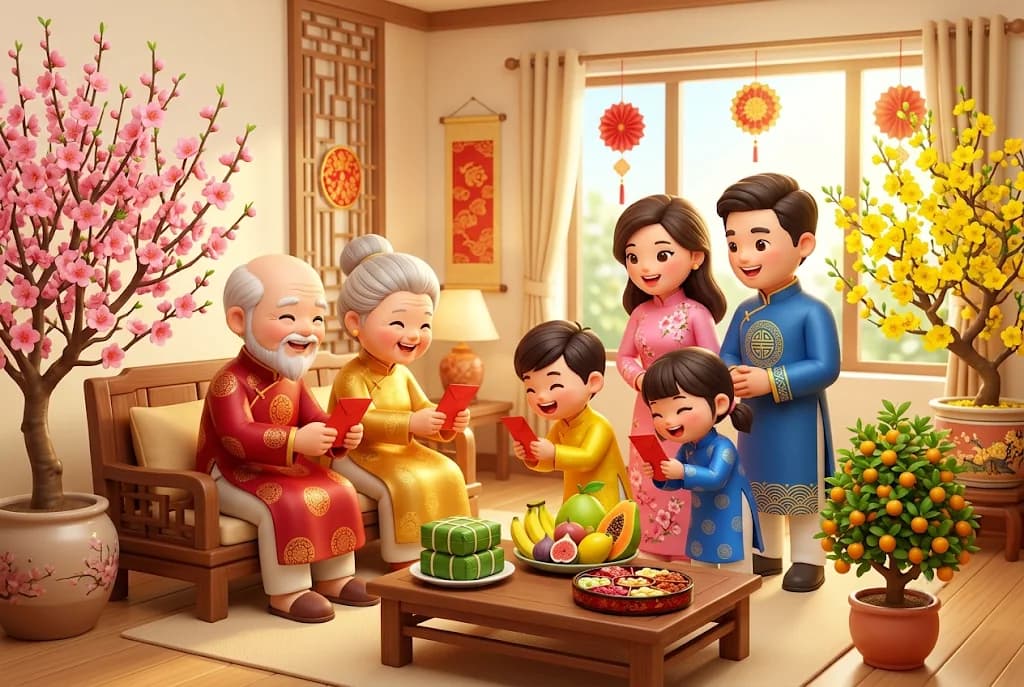
The first three days are for visiting. An old saying explains the order: the first day is for your father's family, the second day is for your mother's family and the third day is for your teachers. Children wish older people good health and a long life, and they get lucky money in red envelopes. The first visitor of the year is important too, because people believe this person brings good or bad luck for the whole year.
Ba ngày đầu năm dành để đi thăm hỏi. Một câu nói xưa giải thích thứ tự: mùng Một Tết cha, mùng Hai Tết mẹ, mùng Ba Tết thầy. Trẻ em chúc người lớn mạnh khoẻ, sống lâu và được mừng tuổi bằng bao lì xì đỏ. Người xông đất đầu năm cũng rất quan trọng, vì người ta tin rằng người này mang đến may mắn hoặc xui rủi cho cả năm.
Tet is not the same everywhere. In the north, families buy pink peach blossom and kumquat trees and eat square sticky rice cakes. In the south, they choose yellow apricot blossom and make long, round cakes called banh tet. But one thing never changes: before Tet, millions of people travel a long way to be with their families. That is the heart of Tet: coming home.
Tết mỗi nơi một khác. Ở miền Bắc, các gia đình mua hoa đào hồng, cây quất và ăn bánh chưng vuông. Ở miền Nam, người ta chọn hoa mai vàng và gói những đòn bánh dài, tròn gọi là bánh tét. Nhưng có một điều không bao giờ thay đổi: trước Tết, hàng triệu người vượt quãng đường dài để về bên gia đình. Đó là ý nghĩa cốt lõi của Tết: trở về nhà.